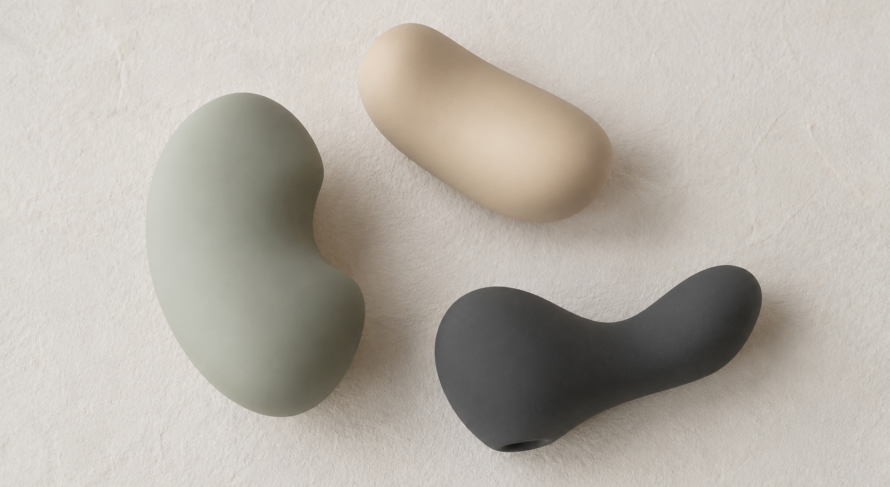
Kegel Balls: Weighted vs. App-Connected, and How to Choose
There’s a particular kind of confusion that shows up the moment someone decides to try kegel balls. They open a shop page expecting one simple product and instead find a dozen versions — weighted, app-connected, single-ball, double-ball, silicone, ranging from under €15 to well over €140. It’s enough to make anyone close the tab and go back to doing nothing, which is exactly the wrong outcome, because kegel balls are one of the more genuinely useful tools in the wellness aisle, not just another gadget.
This is a guide to cutting through that confusion — what kegel balls actually do, how the two main categories differ, and which one makes sense depending on where you’re starting from.
What Kegel Balls Are Actually For
Kegel balls work on a simple principle: your pelvic floor muscles respond to resistance the same way any other muscle does. Holding a weighted object internally engages those muscles automatically, in a way that’s harder to fake or skip than a manual squeeze-and-release routine. Over time, consistent use tends to improve muscle tone, which connects to bladder control, core stability, and — for many people — the intensity of sexual sensation. If you’re new to the topic, our pelvic floor health guide covers the anatomy basics before you start.
They’re not exclusively a postpartum recovery tool, though they’re often marketed that way. Anyone with a pelvic floor, at any age, can use them as a low-effort way to build and maintain tone, in the same way a resistance band works other muscle groups without needing a gym membership.
Weighted Kegel Balls: The Traditional Approach
Weighted sets, like Fun Factory’s Smartball Uno or the Smartballs Duo, work through simple physics. You insert them, and gravity plus movement create a gentle, constant engagement — your muscles work to keep them in place. Duo sets, with two balls connected by a cord, tend to shift more during movement, which some people find more noticeable and motivating; single-ball sets offer a steadier, more subtle sensation.
The appeal here is straightforward: no charging, no app, no learning curve. You put them in, go about your day for the recommended window (usually starting around 10–15 minutes and building up), and take them out. It’s a format that rewards consistency over complexity, which matters more than it sounds — the muscle only improves with regular use, not with better technology.
Weighted sets also tend to sit at a more accessible price point, which makes them a sensible first purchase if you’re unsure whether the habit will stick.
App-Connected Kegel Balls: Feedback and Progress Tracking
LELO’s Luna Smart Bead represents the other end of the spectrum — a single weighted bead that connects to an app, tracking contraction strength, session length, and progress over time. Instead of guessing whether you’re doing it “right,” you get a visual readout: how hard you’re squeezing, how consistent your sessions are, whether you’re improving week over week.
For people who respond well to data — the same personality that likes a fitness tracker counting steps — this feedback loop can be the difference between a habit that sticks and one that quietly fades after a week. It also offers guided routines, which removes some of the guesswork around technique that trips up a lot of first-time users.
The tradeoff is cost and complexity. You’re paying for the sensor technology and the software behind it, and there’s a small learning curve in pairing the device and understanding what the app is telling you. For someone who just wants a simple, screen-free way to build a habit, this may be more than necessary.
LELO’s Luna Beads Mini: A Middle Ground
Worth mentioning separately is the LELO Luna Beads Mini — a weighted (non-app) set from LELO, sized specifically for beginners or those with less pelvic floor experience. It bridges the gap between the affordability of a basic weighted set and the build quality and thoughtful weight calibration LELO is known for. If the idea of an app feels like overkill but you still want a premium, well-designed product, this sits in that space.
How to Actually Choose
A few honest questions tend to clarify the decision faster than any spec sheet:
Are you brand new to this? Start with a lighter, smaller weighted set — the Smartball Uno or Luna Beads Mini — rather than jumping to the most advanced option. Comfort and consistency matter more at the start than features.
Do you like tracking progress in other areas of your life? If you already track workouts, sleep, or steps, the app-connected Luna Smart Bead will likely feel like a natural fit rather than an unnecessary extra.
Do you want something you never have to think about beyond “put in, take out”? A simple weighted set removes every extra decision. There’s real value in that simplicity, especially in the first few months of building the habit.
What’s your budget for a first try? If you’re not sure this will become a regular practice, starting with a more accessible weighted option lets you test the habit before investing in a premium, feature-rich device.
None of these are wrong answers — they just point toward different tools for the same underlying goal. The muscle doesn’t know or care which product is training it; what matters is whether you actually use it consistently.
Getting Started, Regardless of Which You Choose
Whichever set you land on, the early approach is the same: start with shorter sessions than you think you need, use a compatible water-based lubricant for comfortable insertion, and don’t chase intensity in the first few weeks. Consistency — a handful of minutes most days — outperforms occasional long sessions by a wide margin, the same way it does with any other form of physical training.
If you’re unsure where to begin with technique itself, our guide on finding and training the right muscles covers the fundamentals in more depth — worth a read before your first session, whichever device you choose.
Care and Maintenance
Kegel balls are a long-term investment in a habit, and a small amount of care keeps them safe and effective for years. Medical-grade silicone — the material used across nearly every set worth buying — is non-porous, which means it doesn’t harbor bacteria the way lower-grade materials can, but it still needs a proper clean after every single use, not just when you remember.
Rinse with warm water and a proper toy cleaner, avoiding harsh soaps or anything with alcohol, which can degrade silicone over time and shorten the lifespan of the product. Let them air dry completely before storing — a breathable pouch works better than an airtight container, which can trap moisture. For app-connected sets, check the seal around the charging contacts periodically; that’s the one component that needs slightly more attention than a fully sealed weighted set.
Stored and cleaned properly, a good set of kegel balls should easily last several years of regular use, which makes the upfront cost — even for a premium app-connected option — a fairly small price against the lifespan of the product.
Frequently Asked Questions
Can kegel balls get stuck?
No — this is one of the most common worries and one of the least founded. The vaginal canal is a closed space; there’s no route for kegel balls to travel further into the body. If a retrieval cord is present, it makes removal effortless, but even ball sets without one can always be removed by bearing down gently, the same motion used during a bowel movement.
How long before I notice results?
Most people report a noticeable difference in muscle awareness and control within 2–4 weeks of consistent daily or near-daily use, in short 10–15 minute sessions. Full improvements in tone and strength — the kind that affect bladder control or sensation — typically build over 8–12 weeks, in line with how any other muscle-training program progresses.
Can I sleep with kegel balls in?
It’s not recommended. Kegel balls are designed for short, active sessions where the muscles are engaged and working, not for extended passive wear. Overnight use offers no additional benefit and increases the chance of irritation.
Are kegel balls safe to use during pregnancy?
Only with a doctor’s or pelvic floor specialist’s approval — pregnancy changes pelvic floor dynamics significantly, and what’s appropriate varies by trimester and individual. This is a conversation for a healthcare provider, not a product guide.
Do heavier balls work better than lighter ones?
Not necessarily. Heavier isn’t automatically more effective — the goal is consistent engagement, not maximum resistance. Many people progress from lighter to heavier sets over time, the same way strength training progresses gradually rather than starting at maximum load.
And whatever you pick, remember hygiene matters as much as the workout itself: a proper toy cleaner after every use keeps things simple and safe for the long run.
Further reading
For readers who want to go deeper, these organisations publish evidence-based educational material on sexual health: