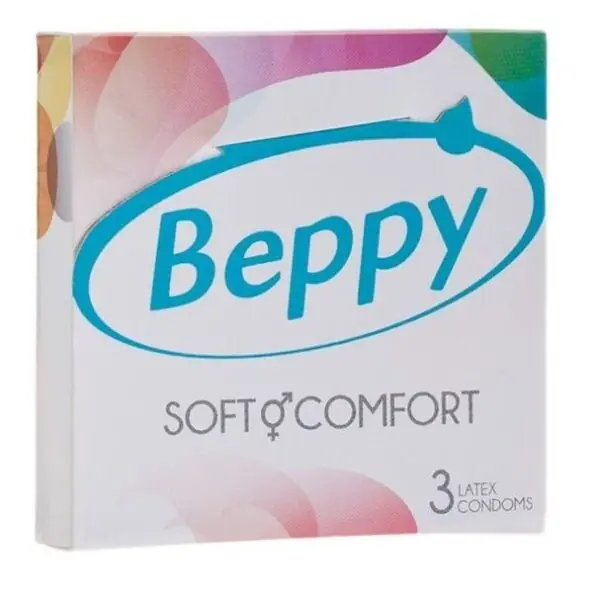
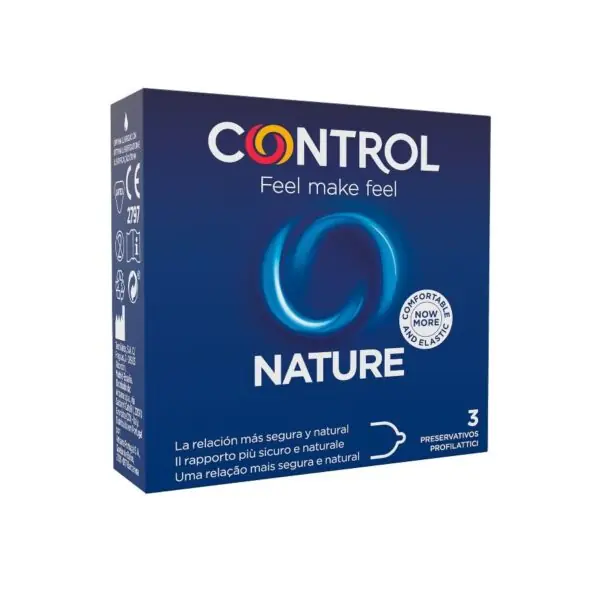
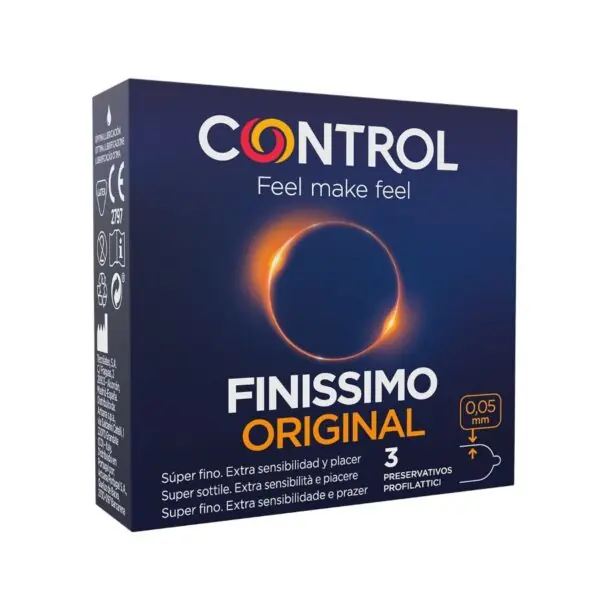
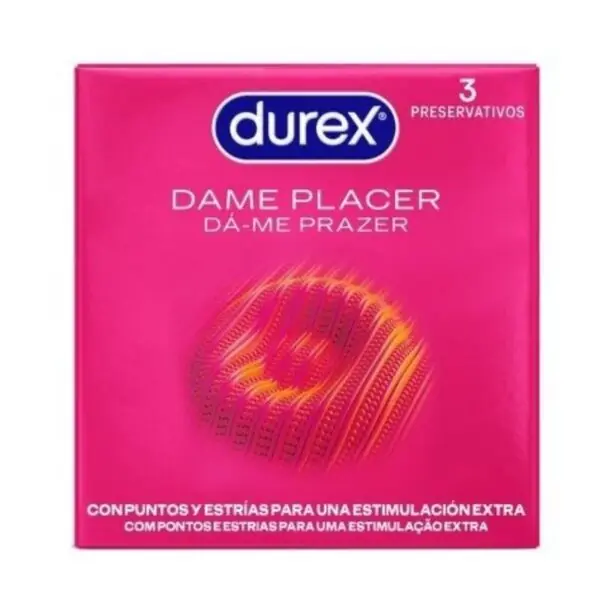
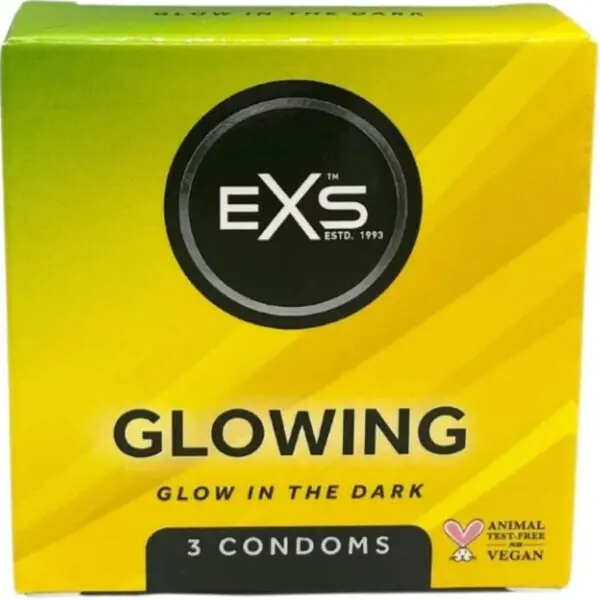
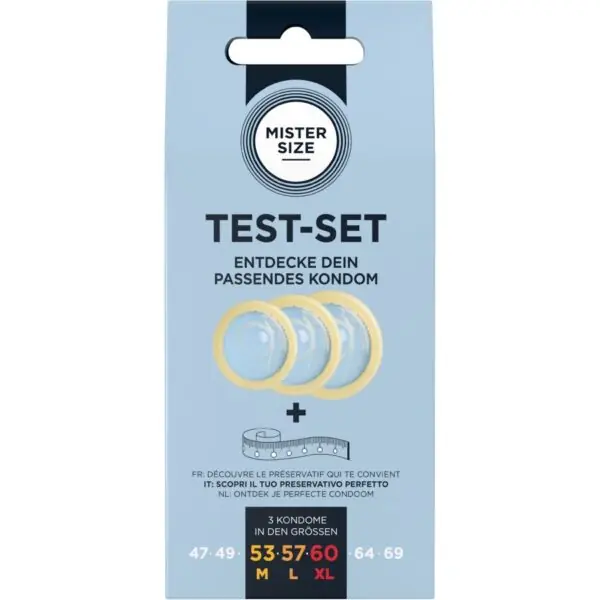
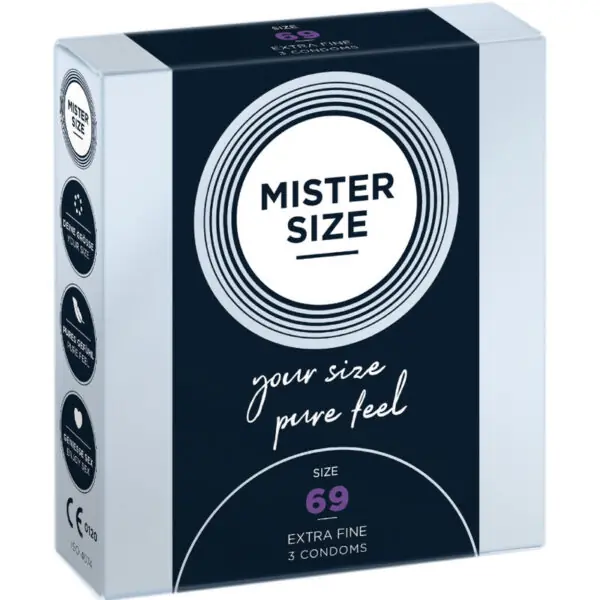
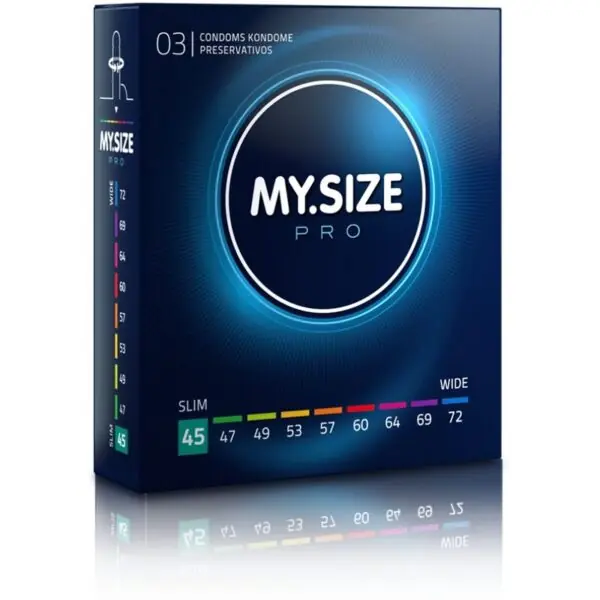
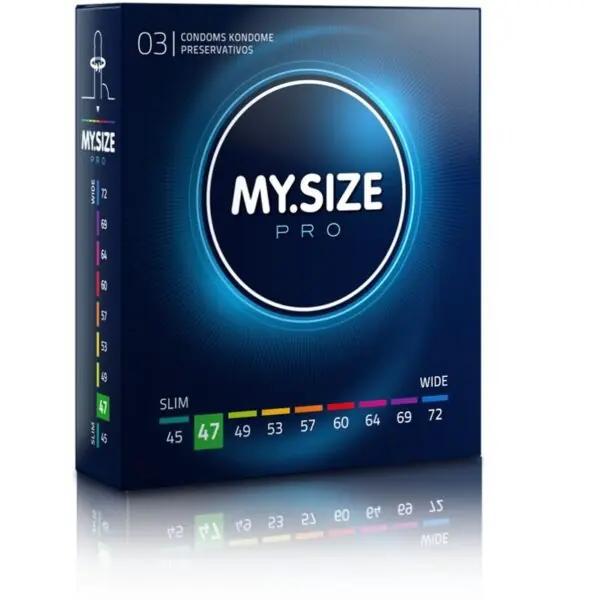
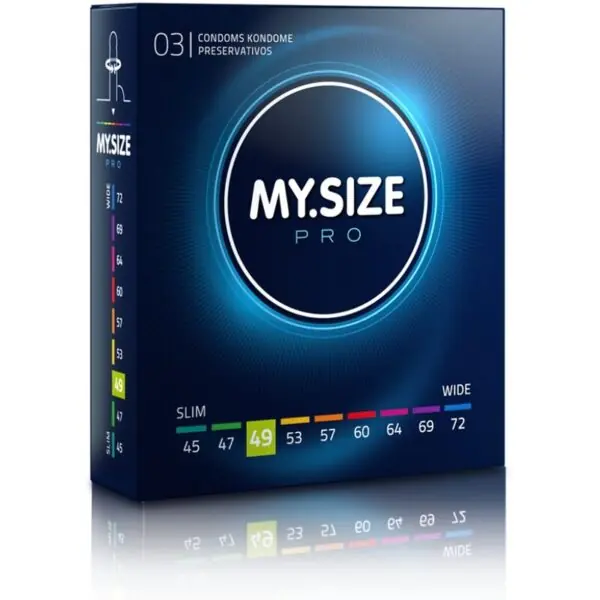
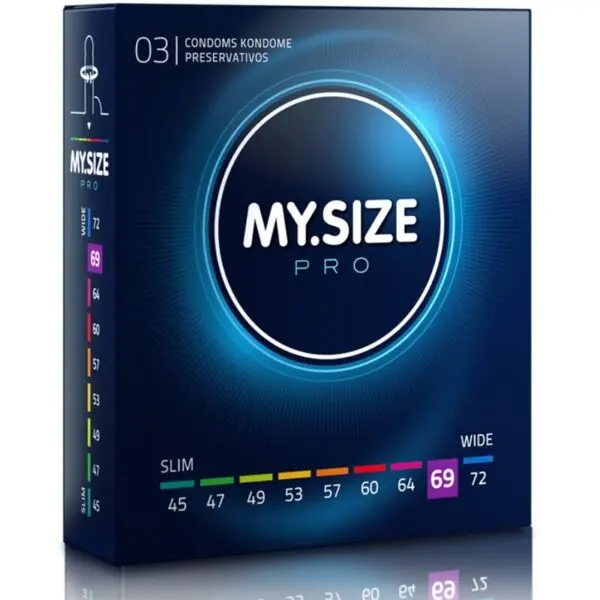
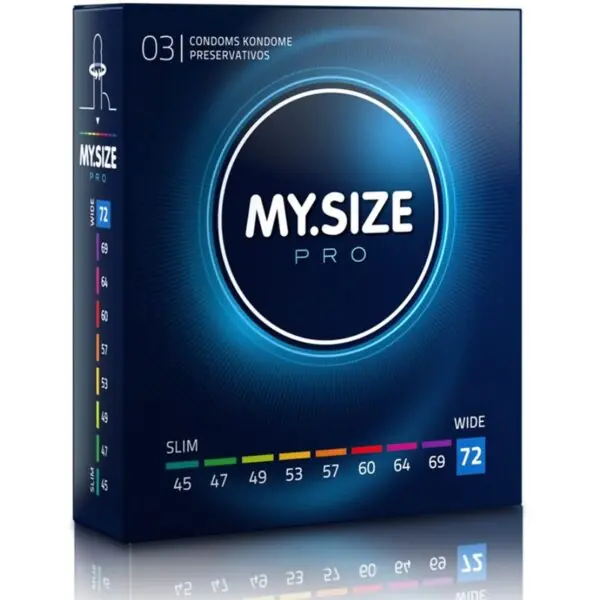
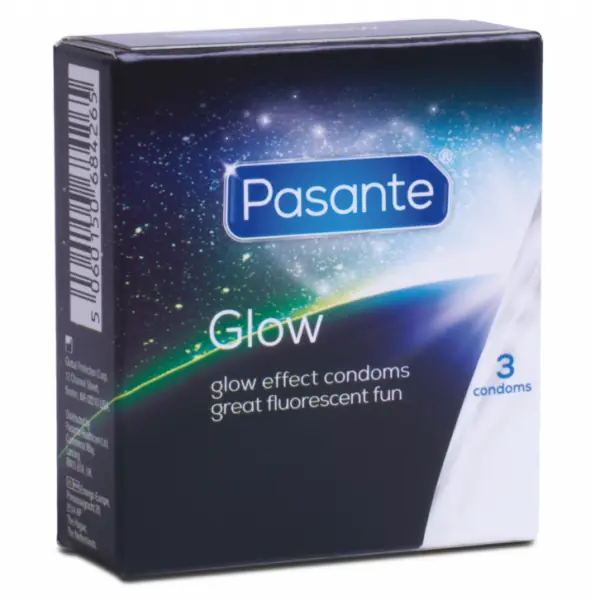
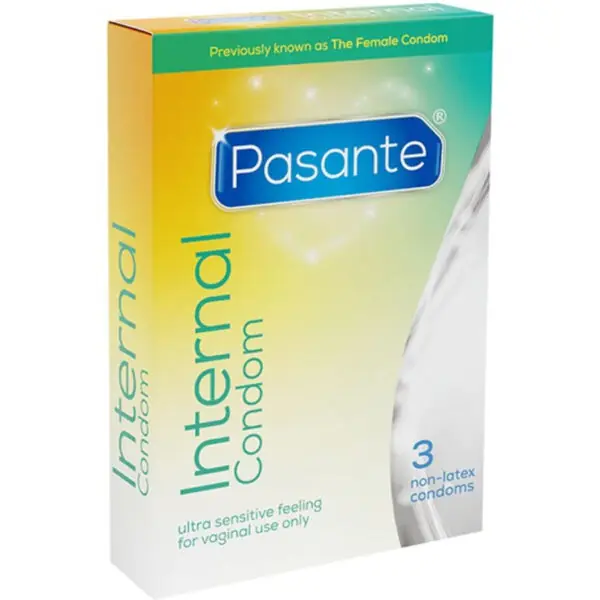
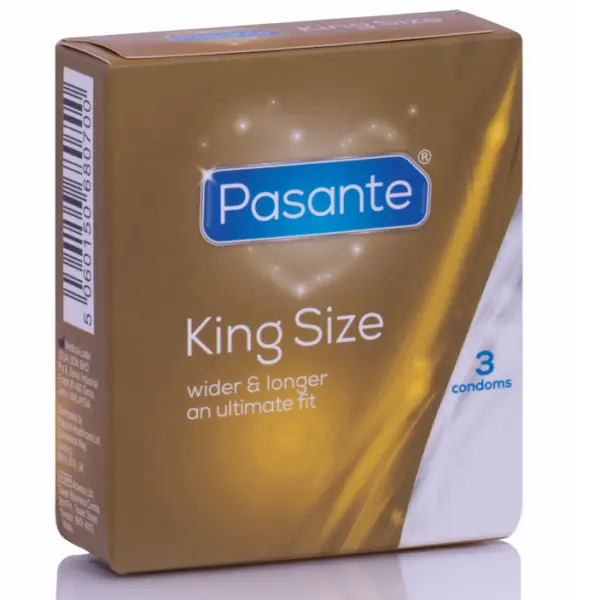
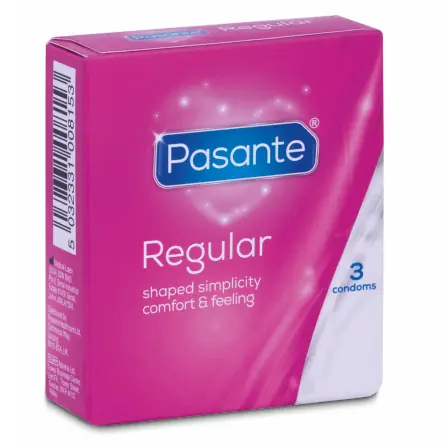
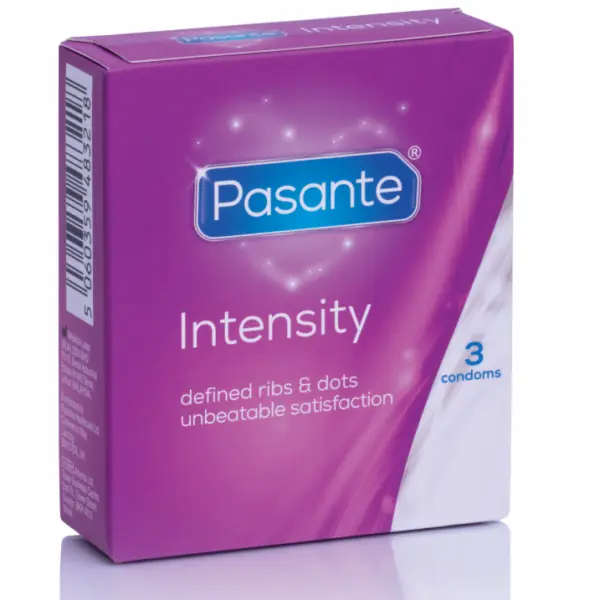
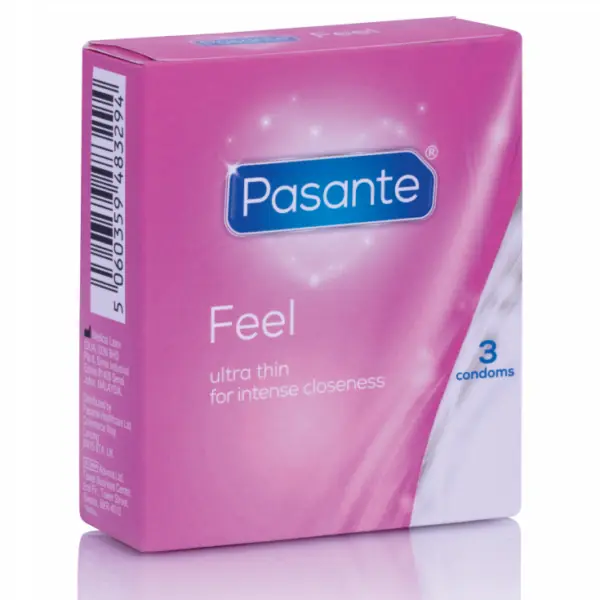
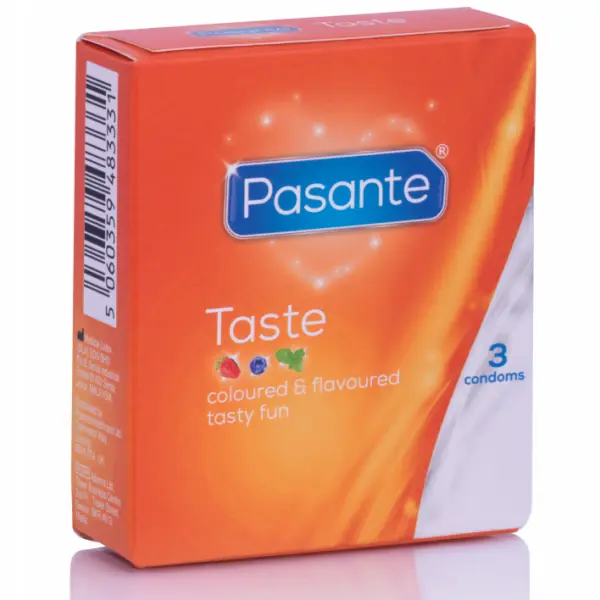
Three condoms in a box. Not the cheapest way to buy them — the cheapest way to test them, which is a different and usually more useful thing.
What a three-pack is for
Finding your width. Nominal width decides fit, and fit decides whether a condom slips, breaks or is comfortable. Guessing on a box of 144 is how people end up with 140 condoms they dislike.
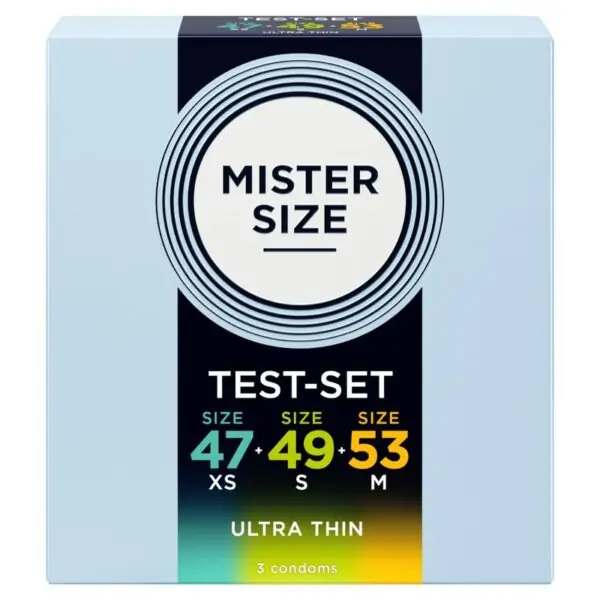
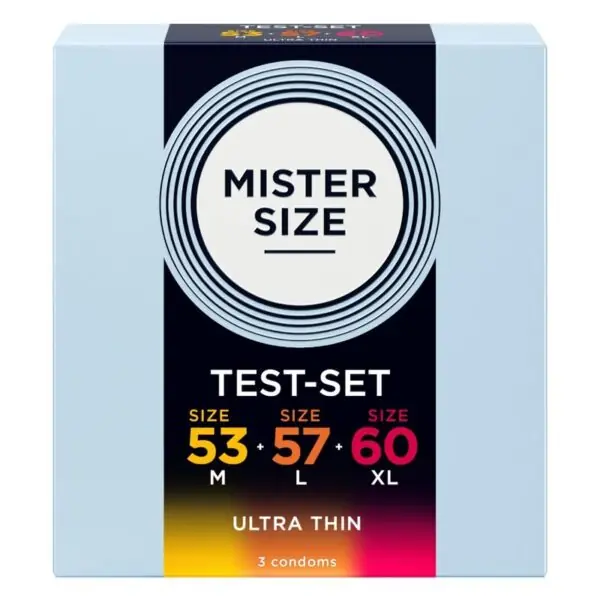
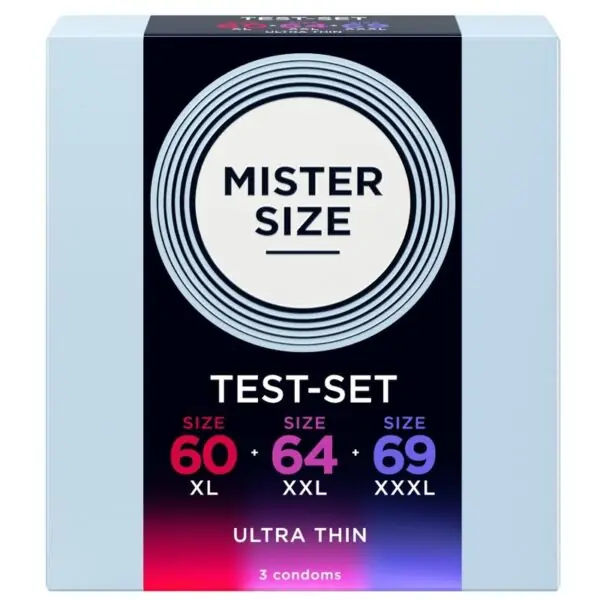
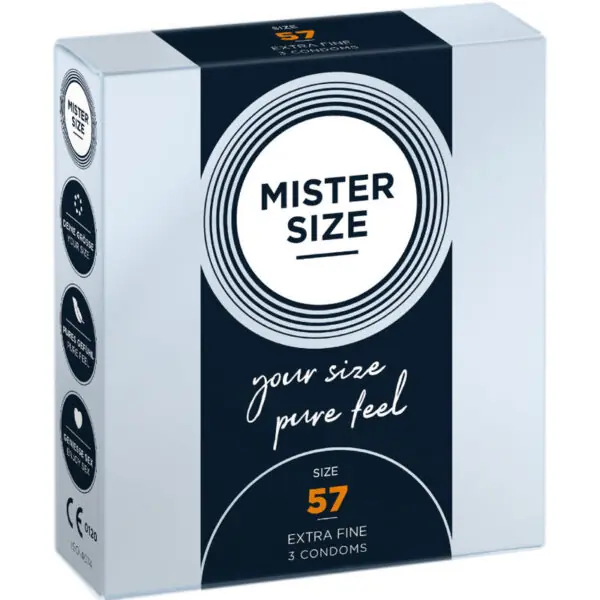
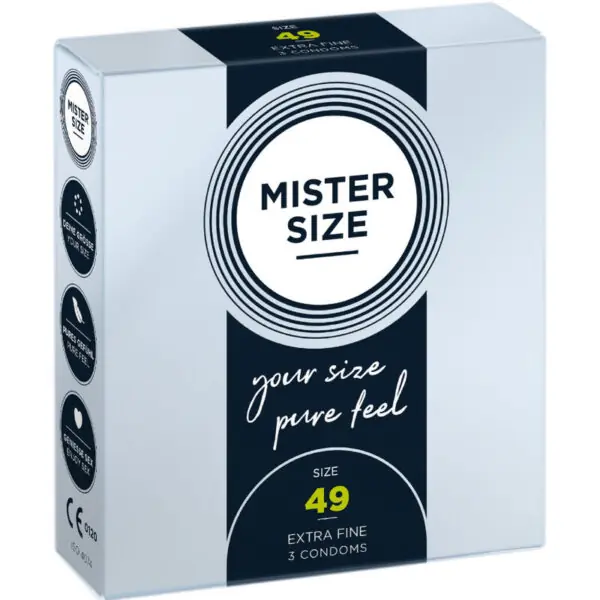
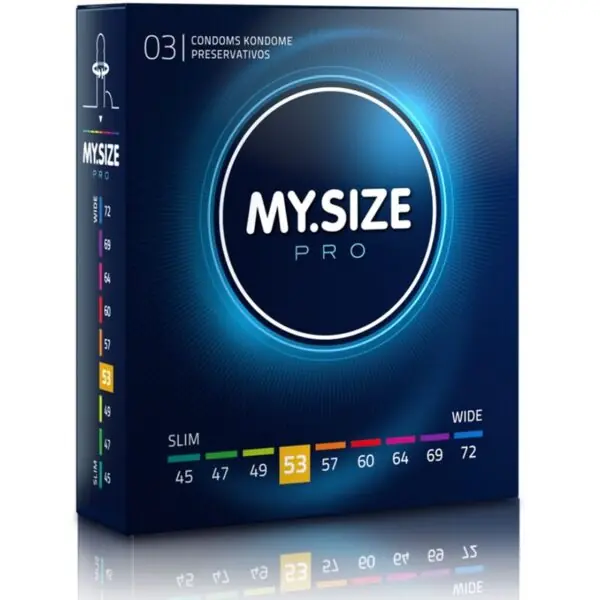
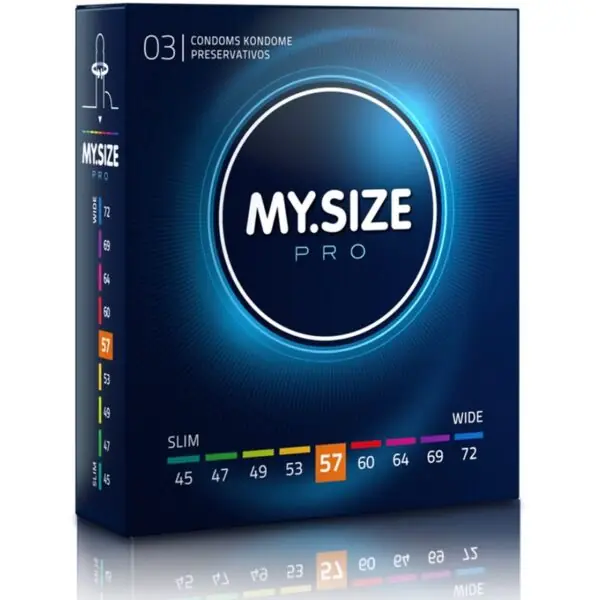
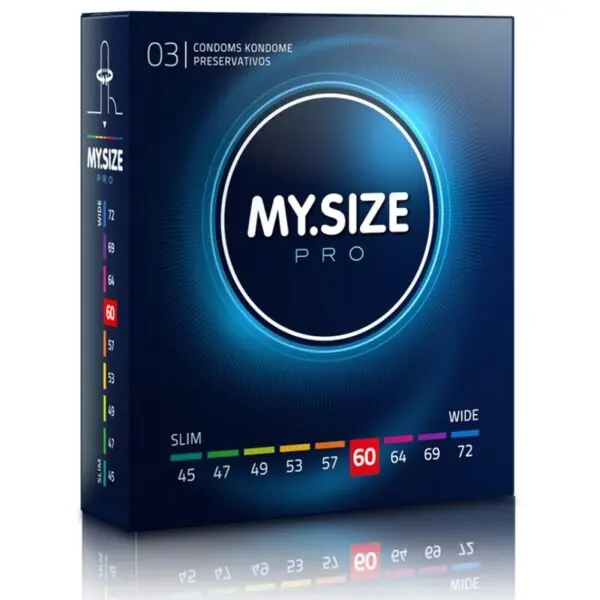
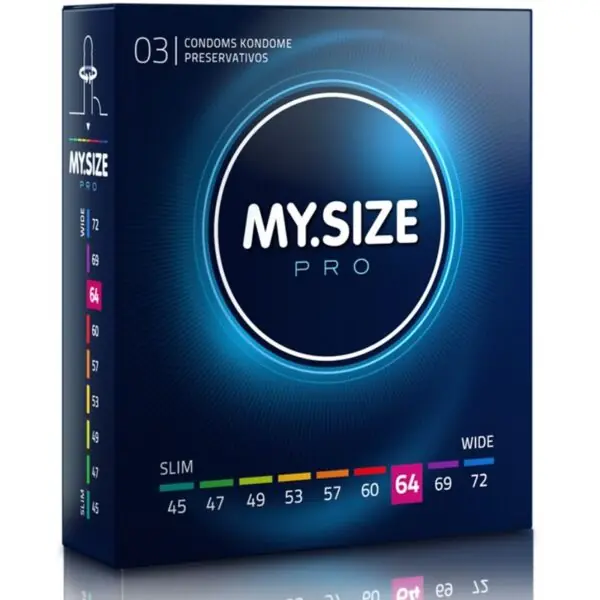
My Size Pro 49 mm and 60 mm are both here, and so are Mister Size 49 mm, 57 mm and 69 mm. Buying two adjacent widths and comparing settles the question permanently.
Testing a latex-free option. If latex irritates you, the Uniq range is here in three-packs: Classic, Megasex Sensitive and Pull with strips. Non-latex is more expensive per unit, so testing before committing matters more here than anywhere.
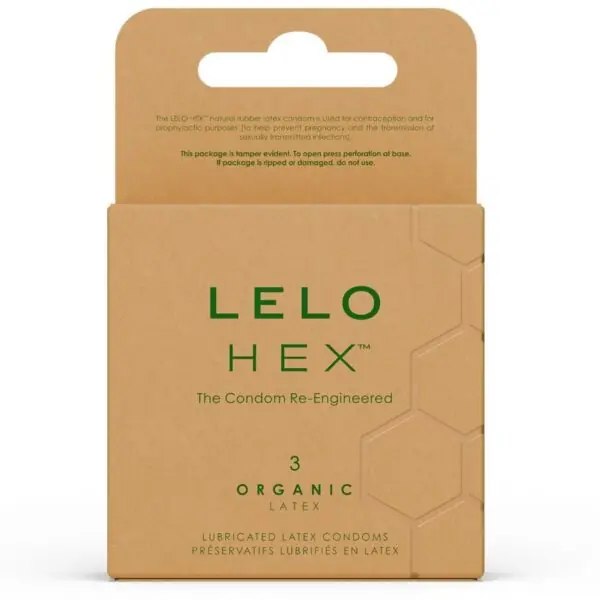
Trying a premium brand. LELO Hex Organic has an unusual hexagonal internal structure. Worth three before twelve.
Keeping a couple somewhere. A three-pack fits in a bedside drawer or a bag without announcing itself.
The cheap standards
Control Adapta Nature, Pasante Regular, Pasante King and Durex Natural are all fine everyday condoms in trial quantity.
Where not to keep them
Not a wallet. Body heat and constant flexing degrade latex long before the printed expiry date, and a three-pack in a back pocket for six months is not the condom it was when you bought it.
Once you know what works
Move up a tier. Boxes of 4 to 24 are the everyday size; boxes from 30 to 288 drop the per-unit price to around a quarter of a three-pack.
Related: condoms by size and the full condom range.
Is a three-pack bad value?
Per condom, yes — roughly four times the price of a bulk bag. As a test, it is the cheapest thing on the shelf.
How many sizes should I try?
Two adjacent widths is usually enough. Start with your measured estimate and the next size up.
Do three-packs expire faster?
No. Same three-to-five-year window as any other box.
Showing 1–40 of 50 results